
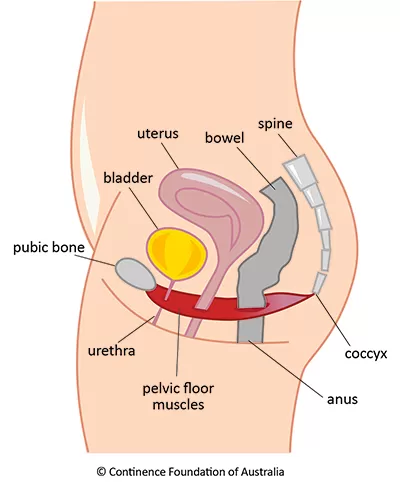
The pelvic floor is a group of muscles and ligaments that form a supportive sling at the base of your pelvis. These muscles help keep your pelvic organs — including the bladder, uterus, vagina (or top of the vagina if you’ve had a hysterectomy), and bowel — in the correct position.
The muscles work with ligaments to support your organs, especially during activities that increase pressure in the abdomen, like lifting, bending, or straining. This is known as intra-abdominal pressure. When it rises, your pelvic floor and abdominal muscles brace to prevent downward pressure on the organs.
Functions of the Pelvic Floor:
- Help control the bladder and bowel, preventing leakage (incontinence)
- Relax to allow easy bladder and bowel emptying
- Enhance sexual function by improving vaginal sensation and control
- Support your posture and spine alongside the abdominal muscles
Not all pelvic floor symptoms are due to weakness — some women need to learn how to engage and use these muscles correctly. Like any muscle, the pelvic floor needs regular activation and strength to function well.
The information on this page is based on guidance from POGP, please see the following website for further guidance
https://thepogp.co.uk/_userfiles/pages/files/resources/20818_pogp_pelvicfloor_for_women_signed_off_1.pdf.