
Tummy Muscle Separation (DRAM) in Pregnancy
What is Diastasis Rectus Abdominis Muscle (DRAM)?
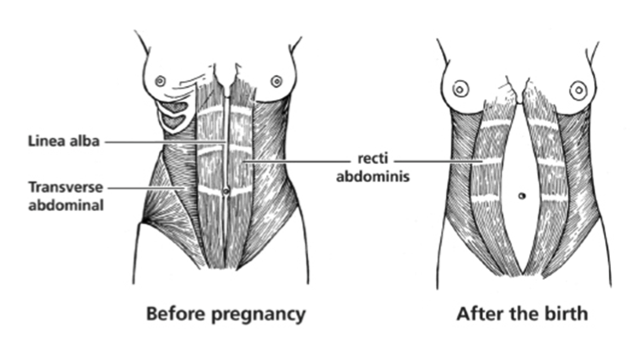
Pregnancy hormones such as relaxin can cause increased elasticity (stretchiness) of the connective tissue that joins the abdominal muscles together.
DRAM is a condition where the rectus abdominis (‘six-pack’) muscle spread apart at the stomach midline (linea alba) to allow room for the growth of your baby.
Risk Factors
- Large baby (8lb plus).
- Multiple births, especially close together.
- Small frame/petite woman (e.g. small pelvis).
- Well defined abdominal muscles.
- Skin tone.
- Position of the baby.
Why is it Important to Treat?
- To decrease the risk of developing a hernia if the divarication remains.
- To improve control of your spinal and pelvic joints to decrease risk of injury.
- To support the pelvic floor muscle to prevent incontinence or bowel problems.
- To help improve the appearance and body image.
Recovery Timeframes
A small divarication usually resolves in 4-8 weeks after delivery. However, it is important not to overwork the rectus abdominis (‘six-pack’) muscle initially. Instead focus on the deeper ‘core’ type muscles around your trunk. A larger DRAM will take longer and you may need physio input.
This content is reproduced from Plymouth Hospitals NHS Trust. © Plymouth Hospitals NHS Trust. Used with permission for informational purposes only. The material is reproduced accurately and not used in a misleading context.